.png?width=1920&height=1080&name=CRARS%2026%20Article%20Why%20are%20your%20climate%20risk%20assessments%20%26%20asset%20decisions%20flawed%20(6).png)
You cannot fund sustainability if the organisation's spend isn't sustainable.
Amid the Strait of Hormuz crisis, Australian procurement teams are moving to adapt to cost pressures, making pragmatic calls on which decarbonisation commitments hold firm and which ones shift.
Budgets built before this year's fuel, materials and wage increases no longer match the environment they're operating in, and treating every target as fixed regardless of that shift ignores the numbers in front of you.
Targets set in a different climate
Most decarbonisation targets were likely set off the back of board pressure, investor expectations, or a genuine appetite to lead on Scope 3 reduction. Some were aspirational by design, a stretch goal to signal intent. Others were grounded in what looked achievable given the cost environment at the time.
That environment has moved. A target that made sense two or three years ago can look very different against 2026 numbers.
Rather than being a failure of planning, this is what happens when the assumptions underneath a target shift faster than the target itself.
What’s changed?
-
Freight and shipping. Costs have surged due to soaring fuel prices stemming from the Iran conflict, climbing global container shipping rates, and compounding domestic landside charges.
-
Inflation. The CPI hit 4.6 percent in the year to March 2026, the highest reading since September 2023, before easing slightly to 4.0 percent by May, according to the ABS. Both figures sit well above the Reserve Bank's 2 to 3 percent target band. Transport inflation alone ran at 8.9 percent through the March quarter, with fuel doing most of the work.
-
Materials. Building materials costs rose 2.5 percent in the year to March 2026, the sharpest annual increase since September 2023 according to the ABS Producer Price Index. If your category spend touches construction, steel, or anything shipped in bulk, expect the next quarter's numbers to be worse.
-
Minimum wage. The Fair Work Commission lifted the National Minimum Wage by 6 percent and modern award wages by 4.75 percent from 1 July 2026, taking the minimum wage above $1,000 a week for the first time.
-
Energy. Electricity costs climbed 21percent higher year on year through the first half of 2026, according to the ABS, as Commonwealth and state rebates rolled off. That's a direct hit on any supplier whose pricing is exposed to energy input costs.
Major organisations that have adjusted or deferred their climate targets
-
BHP: Deferred several large-scale renewable infrastructure investments in its Western Australian iron ore operations until the 2030s. This decision allows the company to wait for heavy-vehicle electrification technology to mature commercially before replacing its current diesel fleets.
-
Origin Energy: Origin extended the operational lifespan of the Eraring coal-fired power station to at least August 2027, delaying its planned closure. The company entered into an agreement with the NSW government to keep the plant running to guarantee grid stability and manage consumer power prices during the state's energy transition.
-
Rio Tinto: The resources giant acknowledged that its interim target of a 15% emissions reduction by 2025 would be difficult to meet through direct operational changes. The company cited slower-than-expected progress in developing the commercial technology needed to decarbonise its energy-intensive aluminium smelting facilities.
-
JBS Australia: The major meat processor withdrew its formal 2040 net-zero pledge from its corporate positioning. This adjustment follows industry-wide challenges in accurately measuring, tracking, and economically reducing biological methane emissions across vast networks of independent cattle producers.
-
Squadron Energy: The renewable energy developer chose to shelve its proposed New England wind farm project in response to rising material inflation, supply chain bottlenecks, and prolonged regulatory delays in securing grid connections.
-
Telstra: Opted to exit the federal government's voluntary Climate Active certification scheme. Rather than continuing to buy external carbon offsets to maintain a carbon-neutral badge, the company is redirecting its budget toward direct, internal emissions reduction initiatives.
-
Australia Post: Also withdrew from the Climate Active framework as part of a shift in its corporate sustainability strategy. The organization is focusing its resources on practical, operational changes, such as electrifying its delivery fleet.
There's precedent for this
You've seen this pattern before. During Covid, sustainability initiatives took a back seat across most procurement functions because continuity of supply and cash preservation became the immediate priority. Targets didn't disappear, but they paused, or slowed, while the organisation dealt with what was in front of it. Then, as conditions stabilised, sustainability work resumed, often with more discipline than before.
The current cost environment is a different shock, but the same logic applies. Pausing or resequencing part of a decarbonisation programme isn't abandoning it.
This is about balance, not backing away
Nothing here is an argument for cancelling decarbonisation targets. Treat them the way you'd treat any other significant commitment. Review them against current conditions. Resequence what the numbers demand, and protect what you can afford to protect.
You can defer a supplier engagement programme by two quarters without abandoning it. You can phase a low carbon materials switch across a longer timeline without giving up the destination. What you can't do is hold a target rigid while ignoring the fact that the spend funding it has become significantly more expensive to deliver. An organisation that runs its core spend into the ground won't be funding anything, sustainable or otherwise, for long.
Having the conversation internally
The teams handling this well are bringing the numbers to the board or the sustainability committee directly, showing what a target cost to fund eighteen months ago against what it costs now, and asking for a decision on sequencing rather than quietly letting a target slip.
This approach protects credibility. A target that gets resequenced with a clear rationale and a revised timeline reads as considered, but a target that is missed without explanation reads as an organisation that either couldn't plan or couldn't deliver.
It also means bringing finance into the conversation early rather than after the fact. A decarbonisation target that was signed off against one set of cost assumptions needs to be re-underwritten against the current ones, and that's a joint exercise, not something procurement can absorb quietly inside category budgets that are already stretched.
Continue the conversation
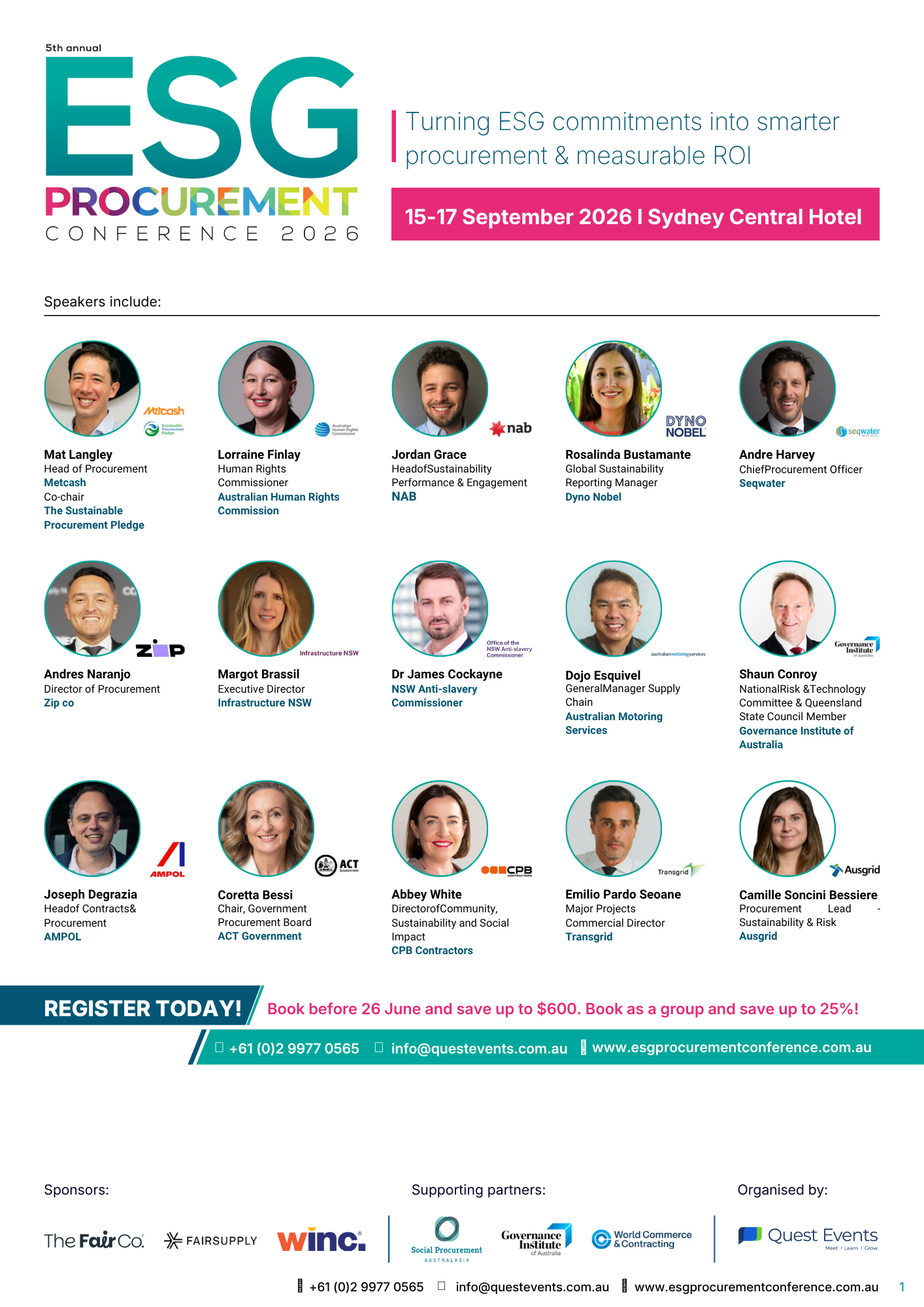
If this is a conversation your team is already having, or one you know you need to start, the ESG Procurement Conference brings together procurement leaders working through exactly this kind of trade off. Have a look at the agenda and see where it fits with what you're navigating right now.